Apr 06, 2026
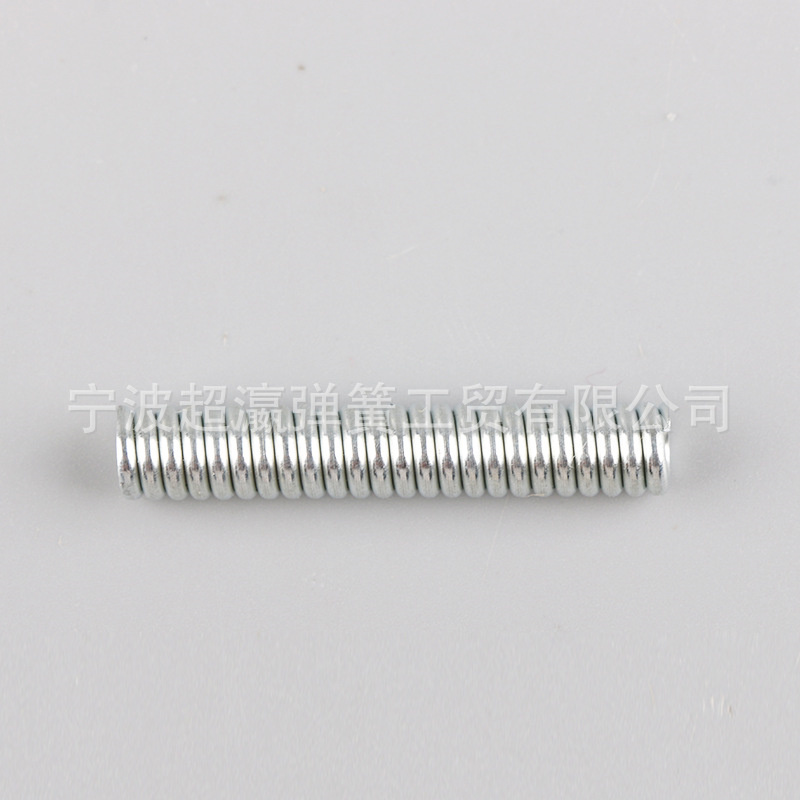
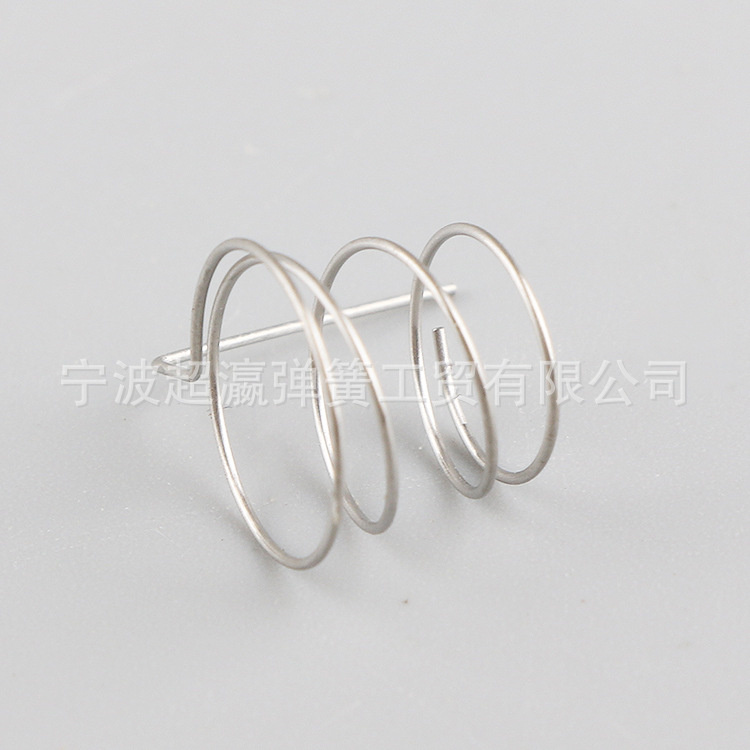
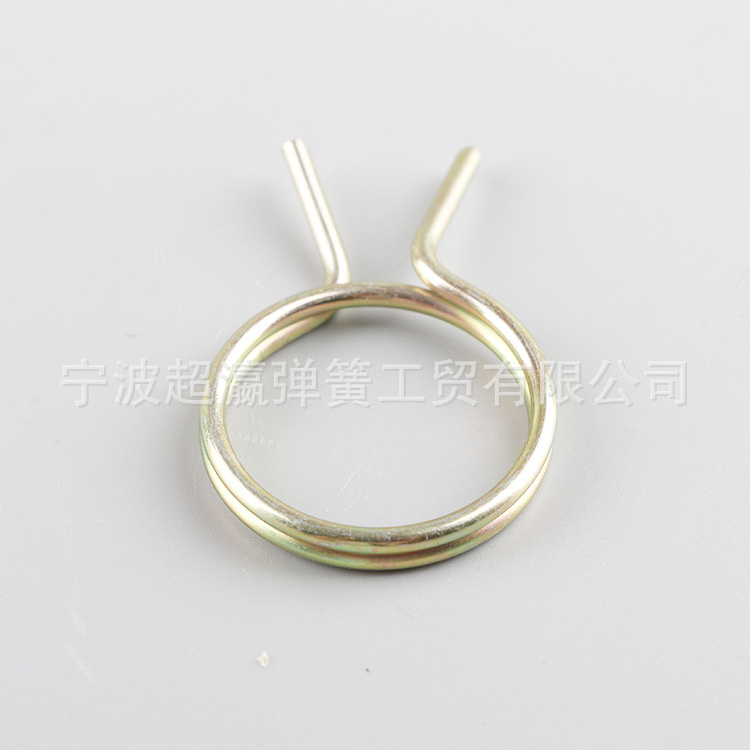
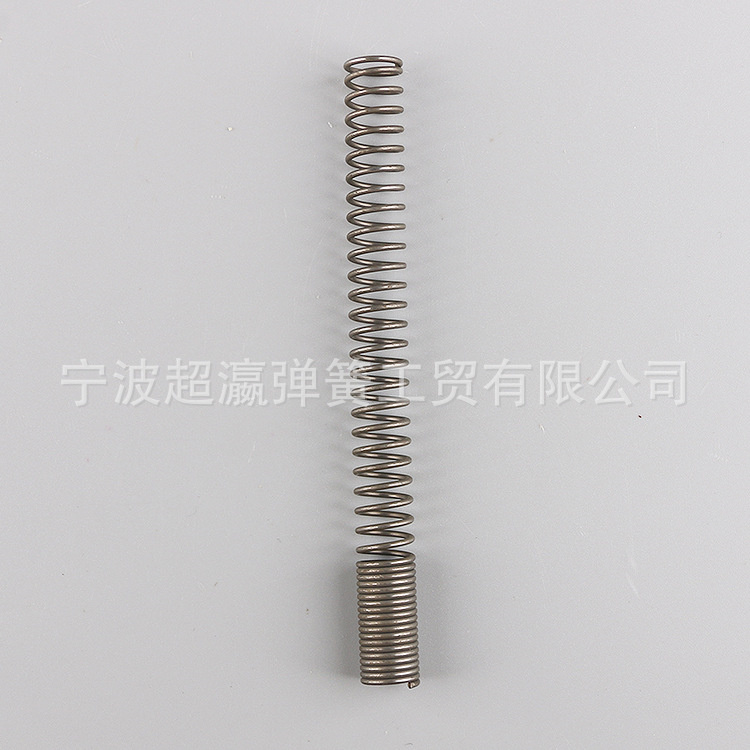
In mechanical engineering, components commonly referred to by laypeople as "pullback springs" or "pulling springs" are technically termed Extension Springs . Unlike compression springs, which absorb energy by being squeezed, a Pullback Spring is designed to create resistance and store energy when stretched. When the pulling force is released, it uses this stored energy to pull the connected components back to their original positions.
A high-quality Pullback Spring is more than just a coiled wire; its performance is determined by several key dimensions:
Initial Tension: This is a unique characteristic of extension springs. During manufacturing, the wire is wound so tightly that an internal force presses the coils against each other. This means the coils remain in close contact even without an external load, and a specific amount of force is required just to begin separating them.
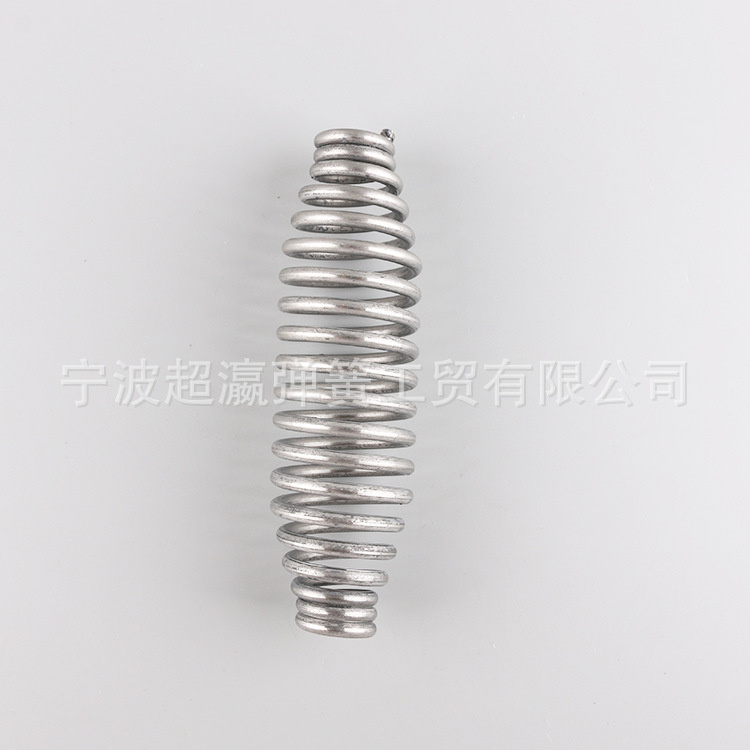
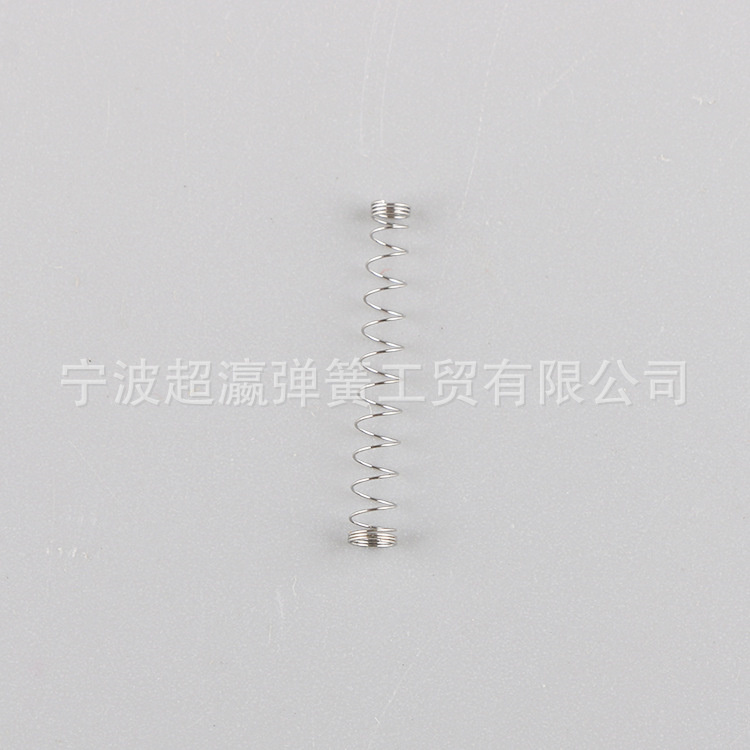
Spring Body: The section of densely packed coils that serves as the primary reservoir for potential energy.
End Configurations: These are the "hands" that connect the Pullback Spring to the equipment. Common types include German Loops, English Loops, and Side Loops.
| Parameter Name | Description | Impact on Performance |
| Wire Diameter | The thickness of the steel wire | Thicker wire results in higher pulling force (stiffness). |
| Outside Diameter (O.D.) | The diameter of the outermost part of the coils | Affects installation space and spring stability. |
| Free Length | Total length in an unloaded state (including hooks) | Determines the installation baseline point. |
| Spring Rate | The force required to extend the spring by a unit distance | Higher rate means more force is needed to pull it, but it pulls back faster. |
| Max Extended Length | The furthest distance the spring can stretch without permanent deformation | Exceeding this value will damage the Pullback Spring . |
In practical applications, these springs often act as "resetters." For example, in automotive braking systems, when you release the pedal, the Pullback Spring pulls the brake shoes away from the drum. In heavy garage doors, it balances the weight and provides auxiliary pulling force during opening or closing. Because its core function is to achieve "post-action return," the term Pullback Spring is highly popular in maintenance and daily communication.
When you pull a Pullback Spring , you are engaging in an energy battle with the molecular structure of the metal. Understanding this process helps determine why some springs last a decade while others fail after a few operations.
Most Pullback Springs are designed to follow Hooke’s Law . Simply put, within the elastic limit, the pulling force generated by the spring is proportional to the distance it is stretched. The mathematical expression states that Force equals the spring constant multiplied by the displacement.
F (Force): The retracting pulling force generated by the spring.
k (Spring Rate): The spring constant, representing the "stiffness."
x (Displacement): The distance the spring is pulled (excluding initial length).
Overcoming Initial Tension: Coils only begin to separate once your pulling force exceeds the "initial tension" imparted during manufacturing. This is the hallmark of a high-quality Pullback Spring .
Elastic Deformation: As stretching continues, the metal lattice shifts, and kinetic energy is converted into elastic potential energy . This is the ideal operating range.
Plastic Deformation (Failure Point): If stretching exceeds the material's elastic limit , the internal structure undergoes permanent slippage. At this point, even after removing the force, the Pullback Spring cannot fully retract.
| Material Type | Yield Strength | Fatigue Resistance | Typical Performance |
| Music Wire | Extreme | Excellent | Strongest snap-back; ideal for frequent, rapid pulling. |
| Stainless Steel (304/316) | Medium | Average | High corrosion resistance, but slightly less pulling force. |
| Oil Tempered Carbon Steel | High | High | Suitable for large industrial pulling with uniform stress. |
| Phosphor Bronze | Low | Medium | Good conductivity; used for micro-retraction in electronics. |
Pulling back a Pullback Spring manually is a potentially dangerous task. Because extension springs store potential energy, the spring can release that energy instantly if a tool slips or a hook breaks.
Manual Stretching: Suitable only for springs with very small wire diameters. Use long-nose pliers to grip the base of the hook.
Leverage Method: Use a screwdriver or pry bar as a fulcrum. Secure one end and use the lever principle to guide the hook into place.
Spring Puller Tool: The most recommended method. The T-handle provides a secure grip, and the specialized hook head is designed to firmly lock onto the Pullback Spring .
| Safety Factor | Check Standard | Risk Consequence |
| Installation Gap | Space should be 1.2x the spring O.D. | Insufficient space causes friction, noise, and wear. |
| Pull Angle | Force must stay within 5 degrees of the axis | Lateral force creates shear stress, causing sudden snaps. |
| Rated Load | Actual stretch should not exceed 85% of design | Exceeding this causes irreversible deformation. |
In the rear of vehicles or other machinery, the condition of the Pullback Spring directly impacts safety. Since these springs are often exposed to the chassis, environmental corrosion is their greatest enemy.
Coil Gaps: Observe the Pullback Spring at rest. If visible gaps appear between coils, the spring has undergone permanent deformation due to fatigue or overload.
Oxidation and Pitting: If pitting (small uneven craters) appears, this is a precursor to a snap.
Elongated Hooks: Check the end hooks. If the circular hook has become oval, the spring can no longer handle its current load intensity.
| Symptom | Possible Cause | Severity |
| Lagging Retraction | Decreased spring rate | Medium: Affects operational efficiency. |
| Clunking Noise | Spring is too loose | High: Spring may fall off at any time. |
| Failure to Reset | Loss of initial tension | Extreme: E.g., brake shoes failing to retract. |
How many stretch cycles a Pullback Spring can withstand depends largely on its metal wire material.
| Material Name | Tensile Strength | Max Operating Temp | Corrosion Resistance |
| Music Wire | Extreme | 120 degrees C | Poor |
| 304 Stainless Steel | Medium | 260 degrees C | Excellent |
| Chrome Silicon | Extreme | 230 degrees C | Medium |
| Phosphor Bronze | Low | 100 degrees C | Excellent |
Because the inner surfaces of Pullback Spring coils are exposed during stretching, common treatments include Zinc Plating for basic rust prevention, Black Oxide to reduce reflection, and PTFE Coating to reduce friction between coils.
When you find a damaged Pullback Spring , choosing a replacement based solely on similar length is extremely dangerous. Incorrect tension will prevent mechanisms from closing properly.
Wire Diameter: Must use calipers accurate to 0.01mm.
Outside Diameter: The widest part of the spring coils.
Body Length: Only the tightly wound coil section, excluding hooks.
Free Length: The total length in a natural state (inside of hook to inside of hook).
Initial Tension: If you can easily pull a gap with your fingers, the initial tension is too low.
When installing a Pullback Spring , the relative angle of the two hooks must match the original. Common types include 0 degrees (parallel) , 90 degrees , and 180 degrees (opposing) . If the angle is incorrect, installation will force a twist in the spring body, creating additional shear stress and shortening service life.
The Art of Lubrication: It is recommended to spray dry PTFE lubricant or light white lithium grease every six months.
Avoid Over-pull Limits: Ensure the stretching distance of the Pullback Spring never exceeds 80% of its maximum safe travel.
Environmental Monitoring: In high salt-spray environments, regularly check the bends of the hooks for stress corrosion.
Q: Can I connect two short Pullback Springs together?
A: Not recommended. Series-connected springs significantly reduce the overall spring rate, making the pullback action sluggish and increasing the risk of breakage at the connection point.
Q: Why does my new spring feel much stiffer than the old one?
A: This is usually because the old Pullback Spring has undergone fatigue weakening. As long as the parameters of the new spring match the original specifications, this "stiff" feeling is the correct performance manifestation.
Q: Why does a Pullback Spring fly away when it breaks?
A: Because an extension spring is always in a "tensioned" state during work. For safety, a safety cable should be threaded through large springs.
Q: Does temperature affect the pulling force?
A: Yes. In high-temperature environments, the elastic modulus of metal drops, causing the Pullback Spring tension to weaken.
สินค้าที่เกี่ยวข้อง
ติดต่อเรา
ที่อยู่โรงงาน
เลขที่ 8, ถนนเถาหยวนใต้, หวู่หยูเฉียว, เมืองเหิงเหอ, เมืองฉือซี, หนิงโป, จีน
อีเมล
โทรศัพท์
+86-188 6787 1218+86-574-62605393
คิวอาร์โค้ด